



RF/Microwave Component Obsolescence: Supply Chain Risk and Domestic Solutions for Defense Programs
Major defense programs are confronting a growing supply chain challenge years in the making. The RF and microwave components that support radar systems, electronic warfare platforms, SATCOM subsystems, and other mission-critical applications are becoming increasingly unavailable through authorized supply channels due to manufacturer consolidation, end-of-life decisions, and market exits.
At the same time, the pool of U.S.-based manufacturers capable of producing qualified replacements has always been limited, and consolidation is shrinking it further.
Defense primes and their suppliers are being forced into difficult choices: absorb extended lead times and steep price increases from a shrinking supplier base, or turn to secondary markets where counterfeit risk is well-documented and growing.
SemiGen, a Naprotek company, offers a domestic solution. SemiGen supplies catalog RF/microwave components, fabricates custom thin film replacements, and supports full RF/microwave complex assemblies, while providing reduced lead times, greater pricing stability, and lower supply chain integrity risk in an increasingly challenging procurement environment.
At a Glance
- The EOL crisis is accelerating — More than 620,000 electronic components were discontinued in 2025, with 52% of those discontinuations happening without advance notice to customers.
- Industry consolidation is shrinking the supplier base — Decades of mergers and acquisitions in the RF/microwave sector have rationalized product lines and reduced the number of qualified domestic manufacturers available to defense programs.
- Counterfeit risk is the hidden cost of gray market sourcing — When authorized supply channels fail, secondary market sourcing exposes programs to counterfeits that range from remarked parts to tampered components designed to malfunction.
- The CONUS manufacturing gap is real — Approximately 75% of global semiconductor manufacturing capacity is concentrated in China and East Asia, leaving U.S. defense programs dependent on a supply chain with significant geopolitical exposure.
- SemiGen offers two paths forward — Existing catalog products may provide compatible form, fit, and function replacement. When a catalog solution is not available, SemiGen can develop and manufacture custom and build-to-print solutions that meet customer-specific requirements.
The RF/Microwave Component Supply Chain Under Structural Pressure
A Market Reshaped by Consolidation and Rationalization
The RF/microwave industry has undergone significant consolidation over the past several years. Tracking notable mergers and acquisitions in 2024 and throughout 2025, everythingRF documented dozens of transactions, ranging from private equity acquisitions of established component manufacturers to large-scale consolidations among major semiconductor firms.
The broader defense electronics supplier base tells the same story. According to a 2025 analysis of defense electronics supply chain disruptions, the number of qualified suppliers in major weapons system categories has substantially declined over the last three decades: tactical missile suppliers have decreased from 13 to 3, fixed-wing aircraft suppliers from 8 to 3, and today 90% of missiles originate from just three sources.
For defense procurement, the downstream consequences are predictable:
- When a larger player acquires a specialized component manufacturer, portfolio rationalization follows
- Lower-volume product lines, including many that have served niche defense applications for decades, are discontinued
- Programs that planned around a specific component's continued availability are left without a qualified source
- The institutional knowledge and manufacturing infrastructure behind those components does not always survive the transition
EOL Events Are Accelerating — Often Without Warning
The scale of component discontinuation across the electronics industry is significant and growing. According to Z2Data's analysis of EOL events in 2025:
- More than 620,000 electronic components were discontinued by manufacturers in 2025
- That figure represents an increase of nearly a third from just two years prior
- Of those 620,000-plus EOL events, 52% were not accompanied by any advance Product Change Notification (PCN) from the manufacturer
- More than half of all component discontinuations in 2025 happened without warning to customers
Programs relying on PCN monitoring as their primary obsolescence early-warning system were, in the majority of cases in 2025, not warned.
The JEDEC standards that govern lifecycle communication, specifically JEDEC Standard 46 and Standard 48, are widely disregarded. Z2Data found that in 2025, only slightly over a quarter of PCNs were in compliance with JEDEC standards, meaning nearly 75% of manufacturers issuing notifications were out of compliance with the industry's own guidelines.
What a Product Discontinuation Notice Looks Like in Practice
A recent product discontinuation notice from a major RF power component manufacturer illustrates how these situations typically unfold: GaN HEMT products are discontinued, replacement equivalents are proposed, and customers who purchased those parts within the prior two years are notified. For programs with longer design cycles or less active supply chain monitoring, notification may come too late to execute a strategic last-time buy, or may not come at all.
The Lifecycle Mismatch Driving DMSMS Risk
The structural challenge facing defense programs is not new, but it is worsening. Defense platforms such as aircraft and naval vessels are designed for operational lifespans that routinely exceed the availability of their electronic components. Electronic components, by contrast, have average lifecycles of just 5 to 7 years.
The financial scale of the problem reflects its criticality. According to Fortune Business Insights, the global defense electronics obsolescence market was valued at $2.74 billion in 2025 and is projected to reach $5.93 billion by 2034, growing at 9% annually. North America accounts for the largest share at 45.69%.
What Is DMSMS?
DMSMS, or Diminishing Manufacturing Sources and Material Shortages, is the DoW's framework for managing this risk. A radar system, electronic warfare platform, or SATCOM subsystem specified and designed a decade ago was built around components that have, in many cases, already passed through one or more full EOL cycles. The program requirements and threat environment have not changed, but the supply chain has, repeatedly.
The Limits of Guidance Frameworks
The DoW has established structured approaches to DMSMS mitigation, including SD-22. But guidance frameworks do not manufacture replacement components. When an RF/microwave part goes EOL and no qualified domestic replacement exists, programs face a set of options with no good answers.
The Downstream Effects on Defense Programs
Extended Lead Times
As the supplier base contracts and surviving manufacturers absorb demand from discontinued lines, lead times for specialty RF/microwave components have extended significantly. Supply chain disruptions in aerospace and defense rose 35% year-over-year in 2024, and lead times have stretched from weeks to months for defense-grade parts. For programs managing urgent sustainment requirements or operating under schedule pressure, this is operationally unacceptable.
Steep and Unpredictable Price Increases
Supply constraints drive pricing power toward manufacturers. Defense programs that budgeted around historical component pricing can find themselves facing cost increases that require contract modifications or difficult tradeoff decisions. The problem compounds when a program has no alternative source. A sole-supplier situation in a constrained market leaves procurement with limited negotiating leverage.
The Backfill Problem
Large defense programs have been forced into reactive backfill procurement, seeking replacement sources for components that were previously stable in their supply chains, at scale. The combination of accelerating EOL events, extended lead times, and price volatility has created backfill demand that the remaining domestic RF/microwave supplier base is strained to meet.
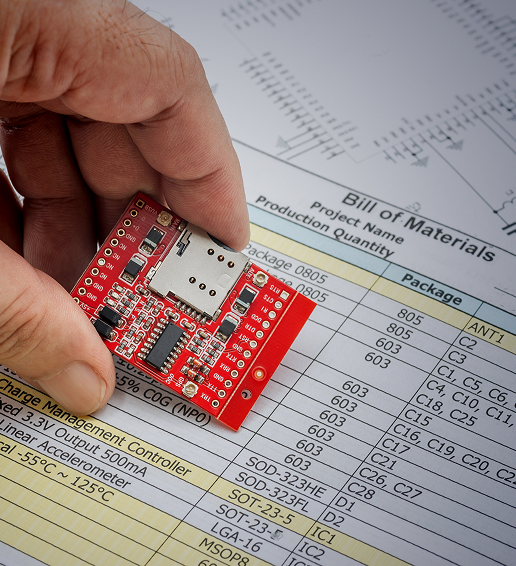
Is Your BOM Carrying Hidden EOL Risk?
Run your RF/microwave component list against a domestic, ITAR-registered source before the next discontinuation notice forces a redesign or a last-time buy under pressure.
Talk to an EngineerCounterfeit RF/Microwave Components: A Growing Threat to Program Integrity
When authorized supply channels fail, procurement teams face pressure to source from secondary markets. This is where counterfeit risk enters the supply chain, and in the defense context, the consequences extend well beyond financial exposure.
The Scale of the Counterfeit Electronics Threat
According to SMT Corp.'s analysis of counterfeit electronic parts in the defense supply chain:
- The Electronic Resellers Association International (ERAI) estimates businesses lose approximately $250 billion annually to counterfeit electronic products globally
- In 2022, ERAI, which tracks only a fraction of counterfeit activity, reported a 35% increase in reported counterfeit parts year-over-year, even as global semiconductor sales remained flat
- In 2019, the worldwide counterfeit semiconductor market was estimated at $75 billion (Industry Week)
An important and counterintuitive finding from ERAI: 62.2% of counterfeit parts reported in 2022 were classified as active parts — components still nominally available from authorized sources. Only 32.5% were classified as obsolete or not for new design. The assumption that counterfeit risk is primarily an obsolescence problem understates the true exposure.
The geographic dimension compounds the risk. According to SMT Corp., citing a 2021 BCG/Semiconductor Industry Association study, the U.S., Europe, and Japan, which dominated semiconductor manufacturing in 1990, had been reduced to a combined market share of roughly 35% by 2020.
Asia-Pacific sources are projected to account for approximately 80% of global semiconductor manufacturing by 2030. As manufacturing has concentrated in regions with different regulatory and IP protection frameworks, the conditions for counterfeiting have grown more favorable
How Counterfeit Components Enter Defense Supply Chains
SAE International's AS6171 standard defines five categories of counterfeit electronic components that procurement teams need to understand:
- Recycled: Parts reclaimed from scrapped equipment, reconditioned, and misrepresented as new; the most common form of counterfeiting
- Remarked: Authentic parts with forged markings representing them as something they are not, for example parts fraudulently marked to indicate an extended temperature survivability range
- Out-of-specification/defective: Nonconforming parts misrepresented as conforming
- Cloned: Unauthorized reproductions that replicate an authorized manufacturer's part through reverse engineering, functional emulation, or illicitly obtained IP
- Tampered: Cloned components modified for sabotage or deliberate malfunction
While recycled and remarked parts remain most common, cloning and tampering are growing in prevalence and sophistication. According to Dr. Nicolas Williams, Director of Electronics Test & Analysis Labs at SMT Corp.:
“The complexity of cloned devices being introduced into the defense supply chain has been steadily developing since the early 2010s. In 2012, we detected a cloned Inverter, a basic electronics logic device. In 2017, flash memory counterfeits were being discovered. In 2019, Microcontroller counterfeits became common. Today, we are seeing complex FPGAs and modules. The complexity of electronics components being counterfeited is growing exponentially.”
The DMSMS-counterfeit connection is direct. Obsolescence forces procurement outside authorized channels. The secondary market is where counterfeits concentrate. Defense and aerospace are particularly at risk because of their long program lifecycles and the DMSMS exposure that results.
Documented Consequences in Defense Programs
The real-world implications of counterfeit components in defense supply chains are well-documented:
F-16 ejection seat failure:
- In June 2020, an F-16 pilot at Shaw Air Force Base died when his ejection seat malfunctioned during an emergency
- The Air Force Research Laboratory flagged several components inside the seat's digital recovery sequencer as suspected counterfeits, including transistors and memory chips showing signs of shoddy craftsmanship, though further analysis would have been required to confirm
- The sequencer is used in ejection seats across the F-15, F-16, F-22, F-117, A-10, B-1, and B-2 platforms
Supply chain infiltration:
- In 2018, Bloomberg Businessweek reported that servers with suspected inserted microchips — manufactured by subcontractors in China — were found in Defense Department data centers, CIA drone operations, and U.S. Navy shipboard networks
The Regulatory Landscape: Requirements Without Consistent Enforcement
The regulatory framework for counterfeit mitigation in defense procurement exists but is unevenly applied:
- DFARS 252.246-7007 (implementing Section 818 of the 2012 NDAA) requires contractors to maintain a counterfeit electronic part detection and avoidance system
- FY2023 NDAA extended restrictions on procuring electronic parts or services from certain Chinese entities
- AS6171 (SAE International, revised 2018) is the most comprehensive counterfeit mitigation standard, covering inspection, testing, workmanship, and certification requirements
Despite these frameworks, SMT Corp. reported that in 2022, 89.3% of authentication tests performed were conducted to the older, less robust AS6081 standard rather than the more stringent AS6171. Adoption of AS6171 is accelerating but remains inconsistent. The Defense Logistics Agency has defined AS6171 as the appropriate standard, but application remains primarily left to prime contractors to determine their own testing thresholds.
The practical implication for procurement: compliance frameworks require counterfeit avoidance programs, but do not prescribe uniform inspection and test standards across the supply chain. The responsibility for managing this risk falls to the program and its suppliers.

Eliminate Counterfeit Risk at the Source
Every SemiGen component carries an unbroken chain of custody from raw substrate to delivery—no distributors, no secondary market, no insertion points for remarked, cloned, or tampered parts.
Talk to an EngineerWhy CONUS RF/Microwave Manufacturing Capacity Is a National Security Imperative
A Shrinking Domestic Supplier Base
The number of U.S.-based manufacturers capable of producing high-reliability RF/microwave components at the specification levels defense programs require has always been limited, and consolidation is shrinking it further. When specialized domestic manufacturers are acquired by larger entities and their product lines rationalized, that manufacturing knowledge does not necessarily survive the transition, leaving programs with fewer qualified sources and greater exposure to secondary market risk.
There is simply not enough domestic capacity to satisfy U.S. and NATO procurement commitments for MIL-PRF and space-grade commodity parts. According to a 2021 study by the Semiconductor Industry Association and BCG, approximately 75% of global semiconductor manufacturing capacity is concentrated in China and East Asia, a region significantly exposed to geopolitical tensions and seismic activity. For defense programs dependent on components sourced from that region, disruption is not a hypothetical risk.
The Strategic Case for Domestic Sourcing
Sourcing RF/microwave components from a domestic, ITAR-registered manufacturer simultaneously addresses multiple program risks:
Counterfeit exposure: Domestically manufactured and tested components carry an unbroken chain of custody from raw material to delivery. There are no intermediary distributors, no secondary market touchpoints, and no ambiguity about manufacturing origin — the conditions that enable counterfeit insertion are removed at the source.
ITAR compliance: For controlled defense programs, components from an ITAR-registered domestic manufacturer simplify compliance documentation and reduce the administrative complexity of managing foreign national exposure throughout the supply chain.
Qualification alignment: Domestically produced components can be manufactured to MIL-STD screening requirements, tested in-house, and delivered with full traceability documentation — without the delays and uncertainty of qualifying foreign-sourced alternatives against program-specific standards.
Lead time and responsiveness: A U.S.-based manufacturer with direct customer engagement can respond to program-specific requirements, urgent sustainment needs, and technical questions at a speed and with a flexibility that distributor intermediaries and offshore sources cannot match.
Source RF/Microwave Components Made in the USA
Reduce geopolitical and lead-time exposure with MIL-STD-screened components manufactured and tested domestically by an ITAR-registered, CMMC 2.0 Level 2 certified supplier.
Talk to an EngineerHow SemiGen Addresses RF/Microwave Obsolescence and Supply Chain Risk
Catalog-Based Replacement: Compatible and Form/Fit/Function Alternatives
When a defense program faces an EOL RF/microwave component, SemiGen's catalog is the logical first point of inquiry. A domestically manufactured, Compatible alternative may already exist — without the cost, time, or program risk of a custom fabrication engagement.
Diodes
SemiGen's diode product lines address the majority of RF/microwave switching, detection, and limiting applications encountered in defense systems:
- PIN diodes — stripline and beam lead configurations for switching and attenuation
- Limiter diodes — receiver protection in radar and EW systems
- Schottky diodes — barrier diodes, bridge quads, and ring quads for mixing and detection
- Zero-bias Schottky detector diodes — low-power detection applications
- Step recovery diodes — harmonic generation and pulse shaping
- Point contact diodes — millimeter-wave detection
All diode products are available with MIL-STD screening, full electrical characterization, and traceability documentation.
Thin Film Passive Components
SemiGen's thin film passive component lines cover the categories most commonly subject to EOL pressure in defense RF/microwave systems:
- Attenuators — ion beam etched thin film attenuators and fixed attenuator pads
- Capacitors — MIS capacitors, binary capacitors, beam lead capacitors, and thin film standoff capacitors
- Resistors — tantalum nitride thin film resistor chips
- Inductors — planar chip inductors and spiral inductors
- Filters — notch, low pass, high pass, band pass, and band reject configurations
- Couplers — thin film RF/microwave couplers
- Transmission lines — 50-ohm microstrip thin film transmission lines
Custom Thin Film Fabrication: A Manufacturing Path When No Catalog Solution Exists
When a program requires a component manufactured to exact specifications, and no off-the-shelf product can satisfy the requirement, SemiGen’s in-house thin-film foundry provides a reliable fabrication path. SemiGen offers both photolithography with chemical etching and ion beam milling. Chemical etching is appropriate for many standard thin-film applications, while ion beam milling is recommended for tighter tolerances and higher-frequency RF applications that require greater dimensional precision and edge definition.
Ion Beam Etching: Precision at the Component Level
SemiGen's thin film processing operation uses ion beam etching to produce custom circuits with tighter tolerances and more consistent performance than conventional chemical etching processes. The ion beam process removes material through a precisely controlled physical mechanism rather than a chemical reaction, enabling:
- Finer feature resolution
- Tighter dimensional tolerances
- More repeatable results across production runs
Metallization Options
SemiGen's custom metallization capability uses titanium, platinum, and gold as standard metals, providing:
- Excellent eutectic value for high-reliability die attach
- Robust bond strength for demanding thermal and mechanical environments
- Films deposited internally via sputtered or evaporated vacuum systems
- Plated gold finishes for superior RF circuit bonding
Substrate Compatibility
SemiGen fabricates custom thin film circuits on a range of substrates to match application-specific electrical, thermal, and mechanical requirements:
- Alumina
- Beryllium
- Aluminum nitride
- Fused silica
- Ferrite
- Glass
- Silicon
What Can Be Fabricated to Custom Specification
Using this capability, SemiGen produces:
- Custom filters and Lange couplers
- Thin film circuits and standoffs
- Terminations and transmission lines
- Planar and spiral inductors
- Laser diode submounts
- Complex custom RF/microwave thin film circuits and devices
The practical implication for an obsolescence scenario: a program facing an EOL component for which no catalog replacement exists can engage SemiGen to fabricate a functional replacement, to the original electrical specification, on the appropriate substrate, with the required metallization and geometry, without redesigning the subsystem around a different architecture.
MIL-STD Screening, Performance Testing, and Qualification Support
Replacement components — whether sourced from catalog or fabricated to specification — must satisfy the qualification requirements of the programs they serve. SemiGen provides:
High-reliability/MIL-STD screening:
- Environmental, electrical, and mechanical testing to applicable MIL-PRF standards
- Screening available for both catalog and custom-fabricated components
RF/microwave performance testing:
- In-house characterization across the frequency ranges defense applications require
- Testing performed against program-specific electrical specifications
Documentation and traceability:
- Full chain of custody from fabrication to delivery
- Test data packages to support program qualification processes
- Compliance documentation for ITAR-controlled programs
RF/Microwave Assembly, PCB Assembly, and System Integration Through Naprotek
For programs where component obsolescence is embedded in a broader assembly or system integration challenge, where replacing a single part requires rework of a module, subassembly, or board, Naprotek extends the solution.
Naprotek's capabilities include:
- RF/microwave assembly — high-reliability assembly of RF/microwave modules and subsystems
- PCB assembly — quick-turn SMT and through-hole assembly to AS9100D and IPC standards
- Performance testing — functional and environmental testing of assembled units
- Design for manufacturability — engineering support to optimize designs for long-term production and supportability
- System integration — full system build, test, and delivery
Defense programs facing RF/microwave component obsolescence can engage SemiGen for component sourcing or fabrication, and Naprotek for assembly and integration needs — two specialized capabilities, under one ownership.
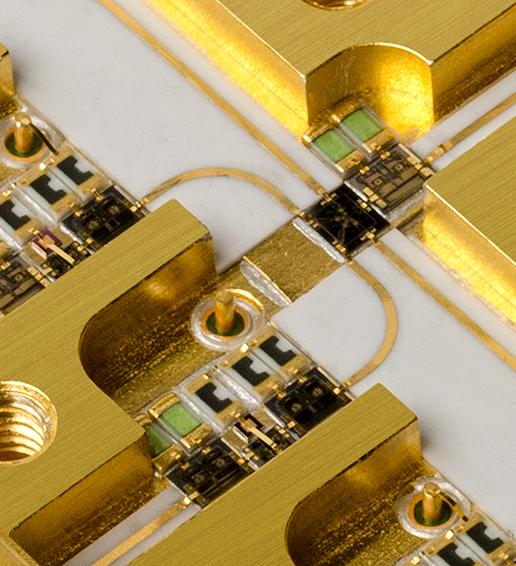
Catalog Replacement or Custom Thin Film—We Build to Spec
Find a qualified drop-in from our diode and thin film passive catalog, or engage our in-house ion beam foundry to fabricate a functional replacement to your original electrical specification.
Talk to an EngineerPositioning for the Long Term: Domestic RF/Microwave Manufacturing as a Strategic Advantage
The supply chain pressures described in this paper reflect structural changes, not temporary disruptions. The long-term contraction of domestic manufacturing capacity, the acceleration of EOL cycles relative to program lifecycles, and the growing sophistication of counterfeit threats will intensify rather than resolve.
The Case for Proactive Engagement
Defense programs that proactively identify domestic manufacturing partners capable of addressing RF/microwave component obsolescence are better positioned to:
- Manage DMSMS risk before it becomes a program crisis
- Execute last-time buys or qualify alternatives while timelines still permit a strategic response
- Reduce dependence on secondary market sourcing and the counterfeit exposure it carries
- Align with NDAA provisions and DoD sourcing guidance that increasingly favor domestic supply chains
Programs that wait until a component is already EOL and unavailable through authorized channels have fewer options, face greater cost exposure, and operate under greater mission risk.
The Broader Industry Alignment
The industry-wide push toward supply chain redundancy and domestic sourcing, reflected in successive NDAAs, DoW microelectronics strategy, and the broader reshoring conversation, creates alignment between national security priorities and the practical procurement decisions that program managers and supply chain teams make every day. As Deloitte's 2026 Aerospace and Defense Industry Outlook notes, supply chain fragility impacts delivery credibility, not just cost, and companies investing in redundancy, supplier development, and digital visibility are better positioned to mitigate risk from external disruptions.

Solve Obsolescence Before It Becomes a Program Crisis
Identify your at-risk RF/microwave components now—while timelines still permit qualifying alternatives—and build domestic redundancy into your supply chain ahead of the next EOL cycle.
Start an Obsolescence AssessmentEngage SemiGen on Your RF/Microwave Obsolescence Challenge
SemiGen works with defense programs and their suppliers to identify, qualify, and deliver replacement RF/microwave components, from catalog inventory or custom fabrication, and to support RF/microwave assembly needs where component obsolescence is part of a larger sustainment challenge.
Whether your program is managing an immediate EOL component crisis, conducting proactive DMSMS risk assessment, or evaluating domestic manufacturing alternatives to reduce supply chain exposure, SemiGen has the capabilities, certifications, and defense program experience to meet your requirements.
Contact SemiGen's engineering team
Learn more about Naprotek's assembly and integration capabilities